


Blog: December, 2009

December 18, 2009
Built Environment energy efficiency, green building, real estate Nigel Hughes

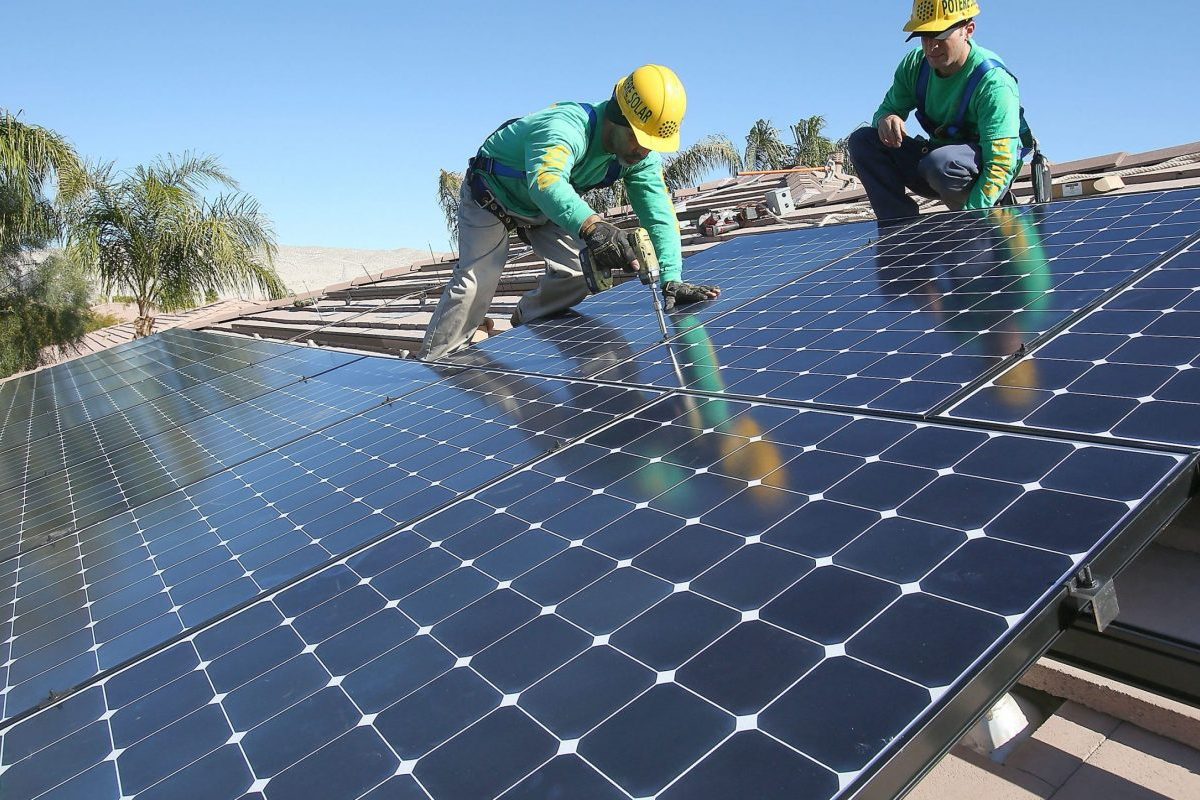
he City of San Francisco is paving the way for owners of residential and commercial buildings to conduct green upgrades to their properties through an innovative financing program.  The San Francisco Sustainable Financing Program (SF2) will provide owners with affordable financing for green retrofit projects, with the repayment obligations tied to the property rather than the owner. The loan repayments and interest will be added to the building’s property tax bill, and paid back over the loan period.

Energy-saving upgrades, such as solar installations and replacement heating systems, are often unattractive to owners because they require sizable upfront expense, whereas it takes many years for the benefits from these improvements to accrue in the form of lower energy bills.  In a traditional financing arrangement, the owner who arranges the financing is responsible for future repayments, even if they were to sell the property during the life of the financing. The property tax assessment model takes this problem away and allows owners to invest in the sustainability of their property and enjoy the many benefits that are gained from a cleaner, more efficient and healthier building.

The San Francisco program is based on the PACE (Property Assessed Clean Energy) framework that was pioneered in Berkeley and has since been adopted by municipalities across the nation.  Unlike some other property tax repayment models, which are solely for solar installations, the San Francisco program will also be used for energy efficiency and water conservation initiatives. Under the program terms, participants are required to conduct an energy audit and install energy efficiency upgrades before any renewable energy improvements are allowed.

Also, in contrast to many similar government-funded programs, the San Francisco initiative will be financed using up to $150 million of private capital, plus any available state and federal grants.

December 15, 2009
Built Environment benchmarking, green building, real estate Nigel Hughes

As one of the leading global real estate services firms, CB Richard Ellis (CBRE) made an early commitment to the promotion of sustainability in real estate, both in its work with clients and in its own operations.  Reflecting this, the firm released corporate responsibility reports in 2007 and 2008 and declared its goal to be carbon neutral in operations by 2010. CBRE's December newsletter, "6 Degrees of Sustainability", provides a good insight to the kind of activities that CBRE is initiating across the green building spectrum. These include:

Real estate professional service firms like CBRE have a key role to play in the promotion of green building practices, and we expect to see that role - and their influence - increasing as sustainability becomes mainstream in the commercial real estate industry.

December 13, 2009
Climate climate change, GHG emissions, global action on climate change, global warming
Wind turbines in Copenhagen

Copenhagen, December 13, 2009 - I am writing this early Sunday morning as my flight arches across the North Sea and begins a slow descent over the Danish Archipelago. It is clear day and the sun is catching the graceful rotations of hundreds if not thousands of windmills that dot the Danish countryside. I am headed to Copenhagen to attend the climate meetings there this week, and as the plane begins its final approach I am thinking about how my journey from Toronto to Copenhagen really began over twenty years ago.

Climate change first burst on the international agenda in the sweltering summer of 1988. Throughout the 1980’s there had been a growing sense of concern among climatologists (scientists who study the physical and chemical processes in that thin layer of life-giving gas that surrounds our planet) that human activities were altering the atmosphere in potentially dangerous ways. In June of 1988 Canada hosted the Toronto Conference on the Changing Atmosphere which brought together climate scientists, energy experts, policy makers and others from around the world to address the problem. I had been working on energy and environment issues for over ten years by then, and the Canadian government asked me if I would organize the energy workshop for the Toronto conference.

Already by 1988 the case for human-induced climate change was strong. The greenhouse effect itself had been understood since the 19th century and the concentration of carbon dioxide in the upper atmosphere was clearly on the rise. Carbon dioxide emissions from fossil fuel combustion were double the level that the ecosphere could absorb, and the surplus was accumulating in the atmosphere. This in turn was enhancing the natural greenhouse effect, and the result would be an increase in the average global temperature. The theory was sound and well established, but in 1988 the signal – the actual increase in global average temperature – was difficult to detect amidst the natural temperature variations.

If the consequence of climate disruption were not so serious, a “wait and see” attitude might have been justified in 1988, but therein lies one of the central dilemmas of this issue. Increases in greenhouses gases today continue to affect climate for decades and even centuries into the future. Every day we continue to emit greenhouse gas emissions at current rates or higher, we lock into place the long term consequences of those emissions. And the consequences of upsetting the global climate system go far beyond simple warming. It’s not unlike the fever we get when suffering from the ‘flu; the average global temperature increase is a symptom of deeper problems. By the time the global atmosphere is running a fever of even one or two degrees Celsius, it represents a significant destabilization of the planetary climate system and anything that is connected to it. And everything is connected to it, including us.

This is where the “precautionary principle” comes into the picture.The precautionary principle states that if an action or policy might cause severe or irreversible harm to the environment, then in the absence of a scientific consensus that harm would not ensue, the burden of proof falls on those who would advocate taking the action. Unless and until such proof can be provided, the action should not be taken. The case of human-induced climate change is clearly such an action. Simply put, we should not risk upsetting the global climate system – the stakes are too high. The precautionary principle was clearly at work in the final statement of the Toronto Conference in 1988 which began with the stark warning that "humanity is conducting an unintended, uncontrolled, globally pervasive experiment whose ultimate consequences could be second only to a global nuclear war.” The statement went on to endorse emission reduction targets that had been worked out in the energy workshop, calling for a 50% reduction in greenhouse gas emissions by 2050, and for immediate actions to reduce global emissions by 20% by the year 2005.

The 20% target became known around the world as “the Toronto target” and it began a profound rethinking of the way we use energy that continues to this day. In the next few years, an international treaty on climate change was drafted, signed and ratified by most of the nations of the world, agreeing that atmospheric concentrations of greenhouse gases must not be allowed to reach dangerous levels. In recognition of the fact that most of the historical increase in greenhouse gas concentrations from fossil fuel combustion was the result of activities in the rich, industrial economies, it was also agreed in the treaty that the onus was on those countries to take the lead in financing and deploying the technologies and solutions for reducing emissions.

By the time we got to Kyoto in December of 1997, individual national targets and timetables were agreed to that specified the emission reductions each of the rich, industrial countries would achieve by 2012. In fact, the targets agreed to in Kyoto fell far short of what everyone knew would be required to stop climate change, but politically they were all that was possible. Even so, the United States Congress would not ratify the Kyoto Protocol, pointing to the futility of reducing emissions in the rich countries while emissions from the developing world continued to grow exponentially. Some countries, like Canada, ratified the Protocol but failed to follow through with the policies and actions that would have been necessary to meet their targets. Other countries, particularly in Europe, went to work developing the policies, regulations and energy efficiency and renewable energy industries that could get the job done, and will meet their Kyoto commitments. Hence the windmills in the Danish countryside.

But the bottom line is that global greenhouse gas emissions have continued to rise, the precautionary principle has not prevailed, and human-induced global warming has moved from a dire warning to a clearly evident and measurable reality. Without the early and active engagement of the United States, Canada and some other industrial countries, and with the double digit economic growth rates that have prevailed in China and other emerging economies, fossil fuel burning has continued to drive up the concentration of carbon dioxide in the atmosphere. We are now irreversibly committed to continued global warming for most of this century, even with the recent reversal of U.S. policy and even if we can achieve a global acceleration of efficiency and renewable energy technology on an unprecedented scale.

That is the situation as the world gathers in Copenhagen this week, and the mood on the ground is tense. Thousands of young people are here, many of them angry, frustrated and bitter at the failure of their elders to take effective actions, to lead. That frustration extends to many of the official delegations from the poorest nations of the world, for whom the impacts of global warming will be most severe, and for whom a fossil fuel driven rise out of poverty seems to be a vanishing option. At the same time, it is more clear than ever that future growth in greenhouse gas emissions will be driven largely by China and other large developing countries, and that they are key to any viable solution for avoiding global warming beyond what is already locked and loaded into the atmosphere from historical emissions and the inadequate responses of the past twenty years.

But, at least we are talking, and there seems to be an understanding of the gravity and the urgency of the choices we face that is greater than I have experienced at previous gatherings of this type. Heads of state will start arriving here over the next few days, including President Obama, and they don’t like to come home empty-handed from such high profile negotiations. It has been a long and winding road from Toronto to Copenhagen, but we will make a choice this week where we go next.

There are circumstances when a “wait and see” attitude is the appropriate response. This isn’t one of them.